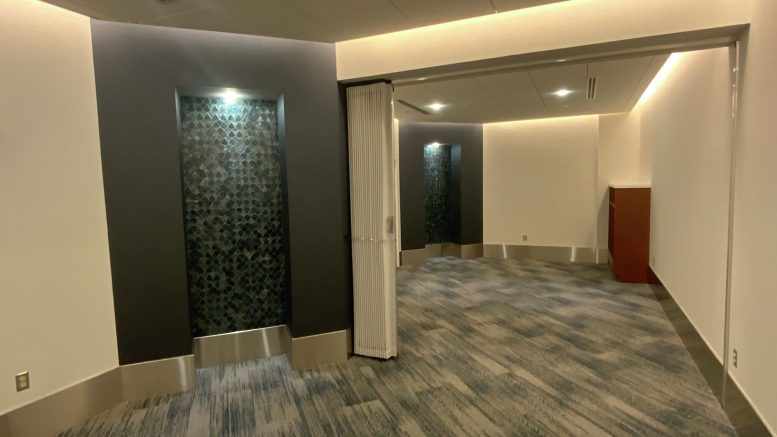

Airports aim to serve diverse travelers, but the Muslim prayer rooms at Houston’s George Bush Intercontinental Airport, (IAH) sparks debate. These rooms, designed for Muslim worship, are officially open to everyone. However, their setup suggests they may be effectively exclusive to Muslims. Additionally, conflicts among modern worship practices in shared spaces and usage patterns highlight the challenge of inclusivity. Let’s see why.

Why the Exclusivity Perception?
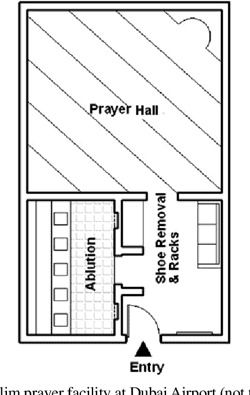
The prayer rooms in Terminal D cater to Muslim needs with features like (wudu) stations for ritual washing, (Qibla) markers for facing Mecca, and strict gender-segregated areas. These align with Islamic practices, such as daily required prayers and strict cleanliness, which differ from other faiths. For example, Christians often use crosses, Jews face Jerusalem, Hindus need altars for offerings (e.g., flowers, food, water) to deities, often at an altar with idols or images. Buddhists worship may include offerings (e.g., flowers, incense), or veneration of Buddha statues or images. None of these practices fit the Muslim rooms’ design, rules, or practices. Consequently, non-Muslims may find these spaces impractical and unwelcoming to their worship needs.
Conflicts in Modern Worship
Modern worship practices often clash in shared spaces. For instance, at JFK Airport, a dedicated mosque sees heavy Muslim use, but its design limits non-Muslim access, similar to IAH. At Denver International Airport, interfaith chapels host Catholic Mass and Muslim prayers, but scheduling conflicts arise when services overlap. Likewise, a Hindu traveler performing (puja) with bells at IAH could disrupt Muslim (salat’s) quiet focus. Additionally, a Christian group singing hymns might disturb Jewish or Muslim prayers requiring silence. These examples show how diverse rituals challenge shared spaces.

Usage of IAH’s Worship Spaces
Usage data for IAH’s worship areas is limited, but estimates suggest the Muslim prayer rooms, opened in 2024, see about 50–100 daily Muslim users, especially during Ramadan or peak prayer times like Friday prayers. The interfaith chapel in Terminal C, established in 2005, likely serves about 150–300 users daily, reflecting broader appeal across faiths, including airport staff and travelers seeking quiet reflection. High traffic in the chapel stems from its flexibility, while the Muslim rooms’ specialized design significantly narrows it’s use. This author attempted to find an image of the Houston Airport Interfaith Chapel for comparison but found only two tiny ones.
Legal and Cultural Context
So, why the exclusivity perception? Social media users are actively debating whether exclusively Muslim rooms’ in American Airports is Constitutional. It seems all other faiths are relegated to the Houston Airport Interfaith Chapel, while Muslims enjoy their own exclusive area. Irregardless, in the Muslim rooms’ the no-icon rule deters Hindus, and gender segregation doesn’t suit most Christians or Buddhists. Even Orthodox Jews, who align with segregation, struggle with the (Qibla) Mecca focus. Moreover, legal concerns shape the open-access policy. The U.S. Constitution’s First Amendment bars favoring one religion, so IAH ensures technical access for all. Yet, the design limits practical use, fueling exclusivity claims and outrage.
Balancing Inclusivity at IAH
Still, the airport’s intent isn’t exclusion, but in actual practice it truly is. The rooms address Muslim-specific needs, like (wudu) ritual washing, unmet in the chapel. Other airports, like Minneapolis-St. Paul, follow this model. However, non-Muslims gravitate to the chapel for its versatility. For example, a Buddhist meditating quietly might use the Muslim room, but chanting could disrupt (salat) silence rule. Clear signage about protocols—like removing shoes, avoiding icons, gender segregation or silence—could reduce friction, but the rooms’ would still remain a non-inclusive hub. It should be noted that other faiths seem to make allowances for one another in the Chapel, despite differences, but the Muslim users seem to be unable to make allowances for others in their rooms.
In conclusion, IAH’s Muslim prayer rooms are open to all in theory, but their design makes them practically and primarily suitable for Muslims alone. The interfaith chapel somewhat balances this by serving other faiths, ensuring inclusivity. Still, the debate highlights the challenge of accommodating diverse religious needs in public spaces. This trend at U.S. International Airports is just beginning and far from settled. What are your thoughts?